
Wuyang’s Overwatch 2 Hero Trial: A Week That Felt Too Late
Wuyang’s Overwatch 2 hero trial promises fluid support gameplay, but its late timing before Season 18 sparks skepticism.
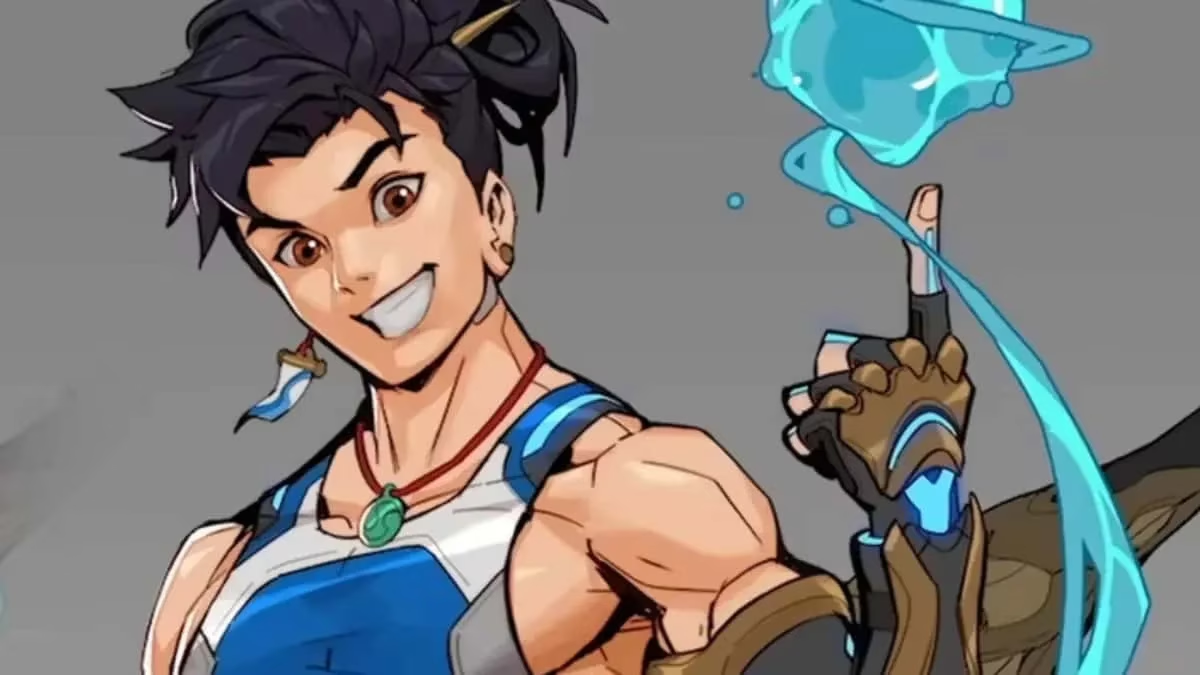
I still remember the odd feeling I got when I read the July 22 blog post. Blizzard had finally pulled back the curtain on Wuyang, the 44th Overwatch 2 hero, and the first details sounded exactly like the kind of support I wanted to master. He was a Chinese support hero from Wuxing University’s Water College, described as rebellious, rhythmic, and built around disruption and flow-based control. The developers promised fluid healing, hybrid damage utility, and graceful mobility. They even warned that he would come with a learning curve and some serious splash potential. But the part that made me pause was not his kit. It was the free trial window: August 14 to August 18.
A Trial Window That Raised Eyebrows
Ever since Mauga, Overwatch 2 has used early hero trials to let players test upcoming characters and give feedback before launch. Usually, those trials happen weeks before the new season, giving the team enough time to gather data, read community reactions, and make adjustments. For Wuyang, however, the trial was scheduled extremely close to Season 18’s launch, right as Season 17 was about to end. I remember staring at the dates and thinking: only a few days? That felt less like a beta test and more like a sneak peek.
| Topic | What I Expected | What We Got |
|---|---|---|
| Hero trial timing | Mid-season or several weeks before launch | August 14–18, just before Season 18 |
| Feedback window | Enough time for meaningful changes | Only a handful of days |
| Community mood | Curious and excited | Baffled and skeptical |
| Hero identity | A new Chinese support | A rhythm and flow-based support from Wuxing University |
| Launch impact | Trial builds hype | Trial risked spoiling the release |
What Made Wuyang Interesting
I have to admit, the concept behind Wuyang sounded genuinely fresh. Blizzard described him as a support who is all about rhythm, disruption, and flow-based control. That is not the usual way supports are framed. Most support heroes are defined by healing output, utility, or survivability, but Wuyang seemed to blend all of that with a more aggressive, fluid playstyle. His fluid healing suggested that his sustain would not be static or simple. His hybrid damage utility implied that he could contribute to fights beyond just keeping teammates alive. And his graceful mobility made me imagine a support who could weave through combat, reposition quickly, and create space in ways that other healers cannot.
The developers also said his damage output would make him stand out from prior support heroes. That line stuck with me. Overwatch 2 supports have often struggled to find the right balance between healing and damage, and a hero who leans into hybrid damage utility could either be a breath of fresh air or a balancing nightmare. I was eager to see how his rhythm-based kit would feel in actual matches. Would he reward players who could read the flow of a fight? Would his splash potential make him a threat in crowded team fights? Or would he be too complex for the average player to pick up quickly?
The Community Reaction Was Not What Blizzard Wanted
The reaction to the trial dates was immediate and mostly negative. I saw comments from players who could not understand why the trial was happening a week before the season. One person said it made no sense and worried it would spoil his actual release. Another asked why the developers chose the end of the season instead of mid-season like usual, pointing out that there would only be a week to receive feedback. Someone else joked that they would not log on for another month. I understood the frustration. A hero trial is supposed to be a conversation between the developers and the community. When the window is that short, it feels more like a marketing beat than a real testing phase.
From my perspective, the timing created three problems:
-
Feedback fatigue 😕 — Players had little time to learn Wuyang, form opinions, and share constructive criticism.
-
Spoiler effect 🫧 — A trial so close to launch can make the official release feel less exciting.
-
Adjustment limits ⏳ — Even if the developers received great feedback, implementing changes before Season 18 would be extremely difficult.
Why the Timing Mattered So Much
I have played through enough Overwatch 2 hero trials to know that timing is everything. A trial placed mid-season gives players room to experiment without the pressure of a new season looming. It also gives the developers a buffer to analyze win rates, pick rates, and community sentiment. Wuyang’s trial, by contrast, landed in a strange dead zone. Season 17 was ending, Season 18 was about to begin, and everyone was already thinking about rank resets, new battle pass content, and the next competitive grind. That is not the ideal moment to ask players to focus on a complex support hero with a learning curve.
I also wonder whether the developers were confident in Wuyang’s state. If a hero is polished and close to launch, a short trial can work as a final stress test. But if the hero is meant to be unique and disruptive, a few days may not be enough to uncover his true strengths and weaknesses. Supports are especially tricky because their impact is often subtle. You cannot judge a support hero purely by damage numbers or highlight reels. You have to see how they fit into team compositions, how they handle dives, how they enable aggressive tanks, and how they feel when your team is losing.
Looking Back from 2026
Now, in 2026, I still think about Wuyang’s trial as a fascinating case study. It showed how much the Overwatch 2 community cares about hero design and how quickly trust can waver when the process feels rushed. The trial did generate conversation, and Wuyang’s identity as a rhythm-based, flow-oriented support from Wuxing University’s Water College remained memorable. But the controversy around August 14–18 overshadowed the excitement. Instead of asking what Wuyang could bring to the game, many players were asking why Blizzard had waited so long to let them try him.
If I could give one piece of advice based on that experience, it would be simple: give players time. A hero trial is not just a demo. It is a promise that feedback matters. When the window is too short, that promise feels hollow. Wuyang may have been designed to be Support done differently, but his trial timing made the rollout feel like Overwatch 2 done the same way as before. And for a hero built around rhythm, disruption, and flow, the rollout itself was oddly out of sync.
Comments