
Why Marvel Rivals’ Fun-First Philosophy Keeps Me Hooked
Marvel Rivals review highlights NetEase’s fun-first balancing and authentic hero design, making each chaotic battle irresistibly entertaining.
I still remember the day I tried to explain to my friend why a team of six Duelists could totally work if we just believed hard enough. Spoiler: we got steamrolled, but I was laughing so hard I nearly choked on my drink. That’s the raw, unpolished heart of Marvel Rivals — a game that feels less like a carefully tuned orchestra and more like a cat walking across a grand piano, somehow producing a jazz number that gets everyone dancing. The devs at NetEase have made it crystal clear since launch that they balance for fun, first and foremost, and even here in 2026, after countless new heroes and meta shifts, that philosophy hasn’t just survived — it’s why I keep coming back.
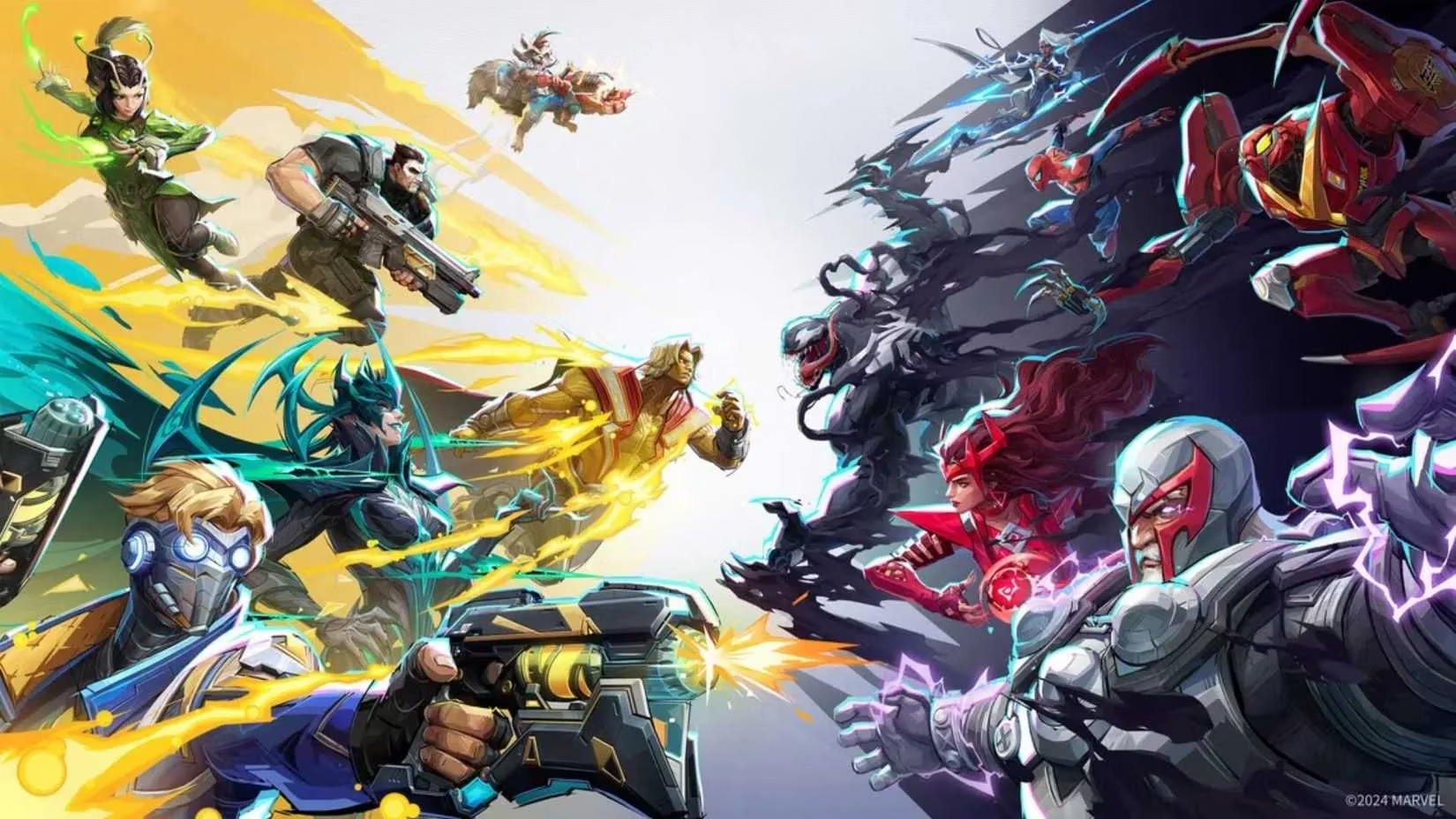
Back in 2025, Executive Producer Danny Koo dropped that now-infamous line in a PC Gamer interview: “We balance for fun, first and foremost.” At the time, a certain part of the playerbase — the spreadsheet warriors who treat every match like a job interview — clutched their pearls. Hi, Jeff the Land Shark mains, I see you. But NetEase doubled down. They wanted each match to feel like a hero-on-hero bar fight where someone’s bound to throw a table through a window, just because they can. That chaos isn’t a bug; it’s the emotional core of the experience. It’s the digital equivalent of a theme park where the roller coaster occasionally goes off the rails but lands in a pool of confetti.
Now, don’t get me wrong — Marvel Rivals isn’t ignoring balance entirely. It’s more like they’re building a house with rubber walls and trampoline floors. The characters you love feel true to their comic-book souls, even if that means someone like Invisible Woman can turn a team fight into a pantomime of confusion. Every hero brings their own flavor of weirdness, and it’s all by design. NetEase even hired comic historians to make sure each new face — whether it’s a household name like Iron Man or some obscure deep-cut from a 1970s issue — feels authentic. It’s like having a museum curator design your Halloween costume; you might end up dressed as a sentient cosmic cube, but you’ll look exactly right.
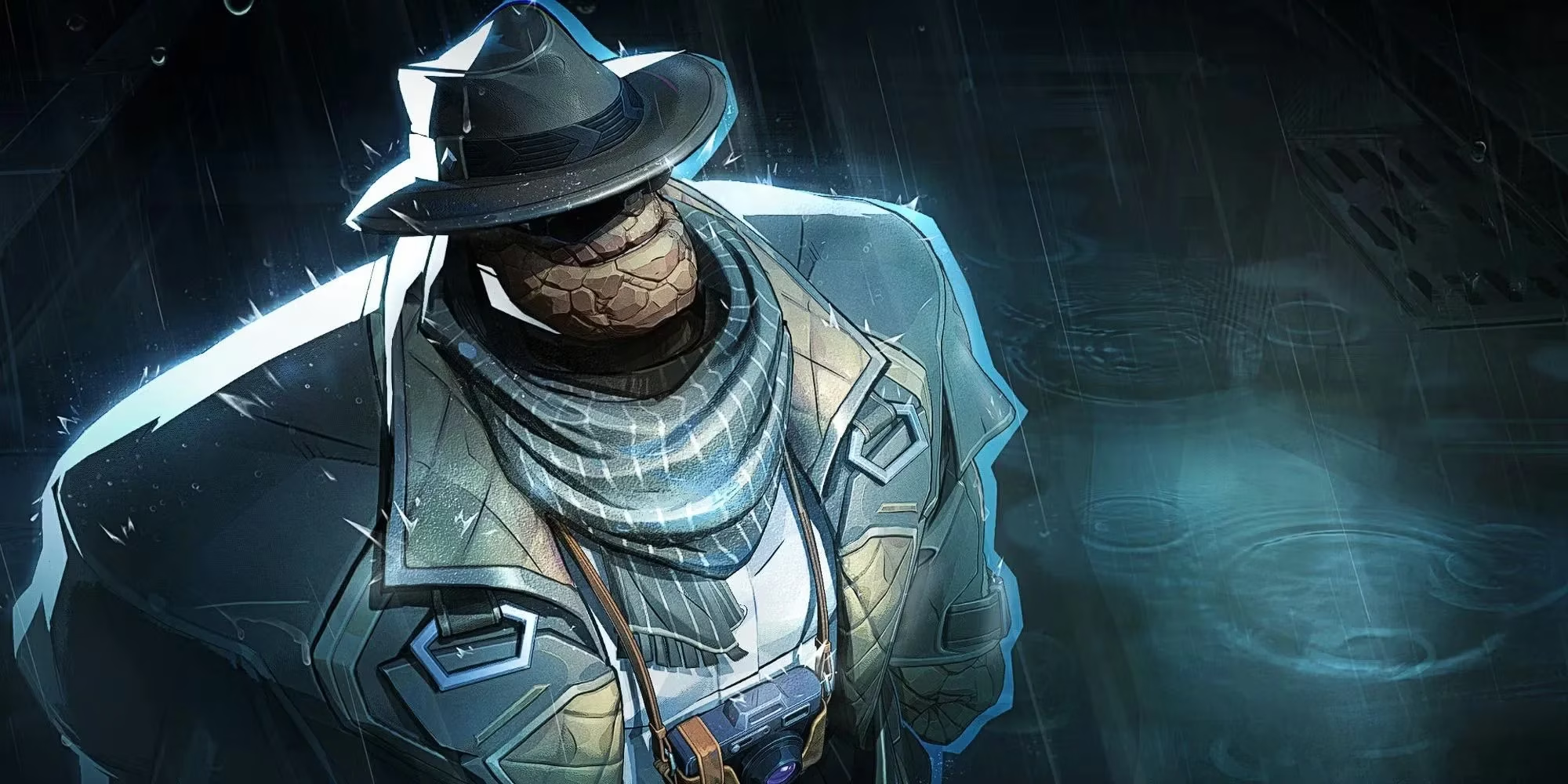
This commitment to character identity is what turns each roster addition into a mini-event. When The Thing stomps onto the battlefield in his latest skin, I don’t just see a tank — I see Ben Grimm’s gruff heart beating under all that orange rock. The devs aren’t thinking, “What does the meta need right now?” so much as, “What power would make a player cackle like a cartoon villain?” That’s why you get abilities that are as impractical as they are glorious, like turning an entire area into a disco of destruction. It reminds me of watching a chef toss ingredients with reckless abandon, only to serve a dish that shouldn’t work but tastes like childhood memories.
Fast forward to 2026, and the player base has grown into a magnificent, argumentative ecosystem. On any given day, you’ll see debates raging about whether a certain comp is “viable” or “just a meme.” But here’s the secret: NetEase is totally fine with the tension. They understand that a game can be for both the sweaty ranked grinder and the person who logs in just to make Wolverine hop around backwards for five minutes. Their goal is to have an option for every playstyle, a superhero buffet where you can pile your plate high with strategic calculus or just grab a fistful of jelly beans. This isn’t lazy design — it’s a deliberate refusal to sanitize the playground.
What really cemented my loyalty, though, is how the team treats the “casual” player as a design north star. If a new hero’s kit doesn’t spark immediate glee in a quick-play match, it goes back to the drawing board, regardless of how elegantly it would slot into high-level theorycrafting. That’s a rare tenderness in an industry that often caters exclusively to the loudest esports voices. NetEase is like a band that judges a hit not by chart position but by how many people are dancing badly in the crowd. And boy, are we dancing badly.
Now, does this fun-first approach occasionally spawn abominations that make me question the fabric of reality? Absolutely. Some intersection of abilities can turn a fight into a strobe-lit, physics-defying circus where I’m not sure if I’m winning or if my character has simply ascended to a plane of pure nonsense. But that’s the point. In a world where so many live-service games sand away every rough edge until they’re smooth, boring marbles, Marvel Rivals feels like a geode — craggy, unpredictable, and crackling with inner light. I’d rather lose a match laughing than win one sighing.
So here I am in 2026, still queueing up, still trying absurd combos, still getting ambushed by land sharks who have clearly made a pact with chaos gods. The devs promised a game where fun leads, and they’ve kept that promise with every new season, every new skin, every new comic-historian-approved lore drop. It’s not a perfectly balanced machine, and thank the multiverse for that. It’s a messy, joyful, heartfelt brawl where the only real commitment is to enjoy yourself — even if that means your strategy is just “let the cat walk across the piano” and hope for a masterpiece.
Comments