
Threads of Ink and Desire: Marvel Rivals' Poetic Dance with Comic Legacy
Marvel Rivals skins ignite debate with bold comic-inspired designs, blending authenticity and flair for an immersive, stylish gaming experience.
In the digital colosseum where heroes clash, a storm brews not of cosmic energy, but of fabric and form. The world of Marvel Rivals pulses with a vibrant, contentious heartbeat, its rhythm set by the swish of capes and the silhouette of skins that have sparked whispers across the internet. Some call it a celebration of legacy, a love letter penned in polygons to the ink-stained pages of Marvel's history. Others murmur a different name—a 'Gooner Game'—their voices laced with critique over designs that dare to reveal as much as they conceal. At the center of this artistic tempest stands Creative Director Guangguang, a weaver of digital tapestries who speaks of inspiration drawn not from fleeting trends, but from the timeless well of comic book lore.
The creative philosophy behind Marvel Rivals is, in Guangguang's own words, a dialogue with history. It’s about taking those classic comic themes—the bold lines, the dramatic poses, the iconic costumes born in eras like Krakoa, 'Blood Hunt,' and 'King in Black'—and giving them a fresh, fashionable twist. The team doesn't just copy; they converse. They look at a legendary design and ask, 'How would this walk and talk in a world of fast-paced, competitive combat?' It's a process of translation, from static page to dynamic play, aiming to earn the appreciation of players who carry the legacy of these characters in their hearts. You could say they're just giving the people what the comics already gave them, but with a bit more... flair.
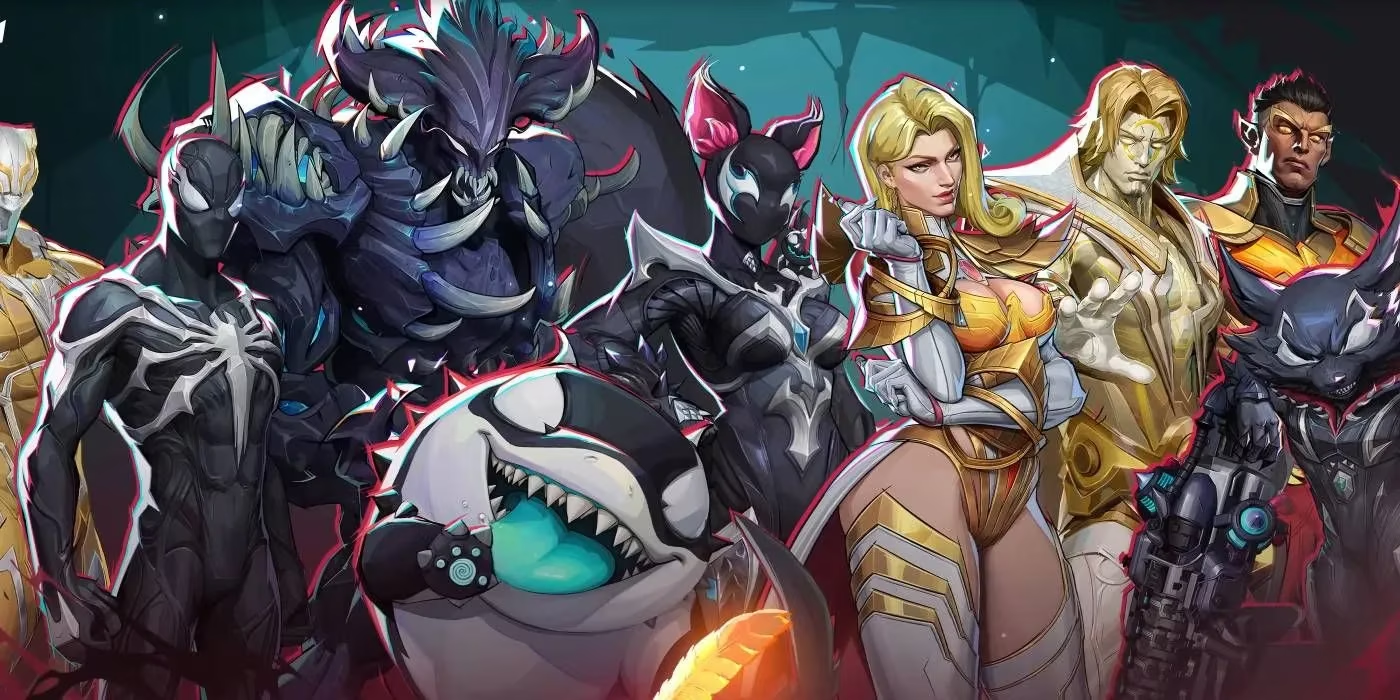
Consider the case of Emma Frost. Her 'X-Revolution' skin, often cited in debates, is not a game developer's fantasy spun from thin air. It is a meticulous digital homage to her appearance in Uncanny X-Men (2013) #1 by Bendis and Bachalo. The distinctive 'breast window' is there, a signature element of her character's defiant, unapologetic power in that storyline. In Rivals, it becomes more than a visual detail; it's a piece of her identity translated into a new medium. This is the game's core argument: authenticity. From Mantis's serene yet striking form to Psylocke's vengeful 'Vengeance' skin, the digital wardrobe is curated from a library of printed classics. The game acts as a bridge, and honestly, a pretty stunning one, encouraging players to explore the source material. Many have found themselves diving into comic arcs, seeking deeper connections to the heroes they command in-game.
Yet, for all its faithfulness, the translation is not without its artistic license—and herein lies the delicate tension. The line between honoring a design and amplifying its sensuality can be as fine as a spider-silk thread. Take Hela's 'Queen in Black' skin. While rooted in comic themes, its in-game model often undergoes subtle alterations, a digital tailoring that accentuates curves and posture, pushing the character model toward a more idealized, sometimes hyper-feminized vision. This is where the game's philosophy meets modern critique. The team walks a tightrope, balancing:
-
Historical Fidelity 🎨: Pulling directly from panel-perfect designs.
-
Modern Aesthetics ✨: Updating textures, materials, and silhouettes for a contemporary video game audience.
-
Gameplay Readability ⚡: Ensuring characters are instantly recognizable in the chaos of battle.
-
Commercial Appeal 💎: Creating visually striking skins that players desire.
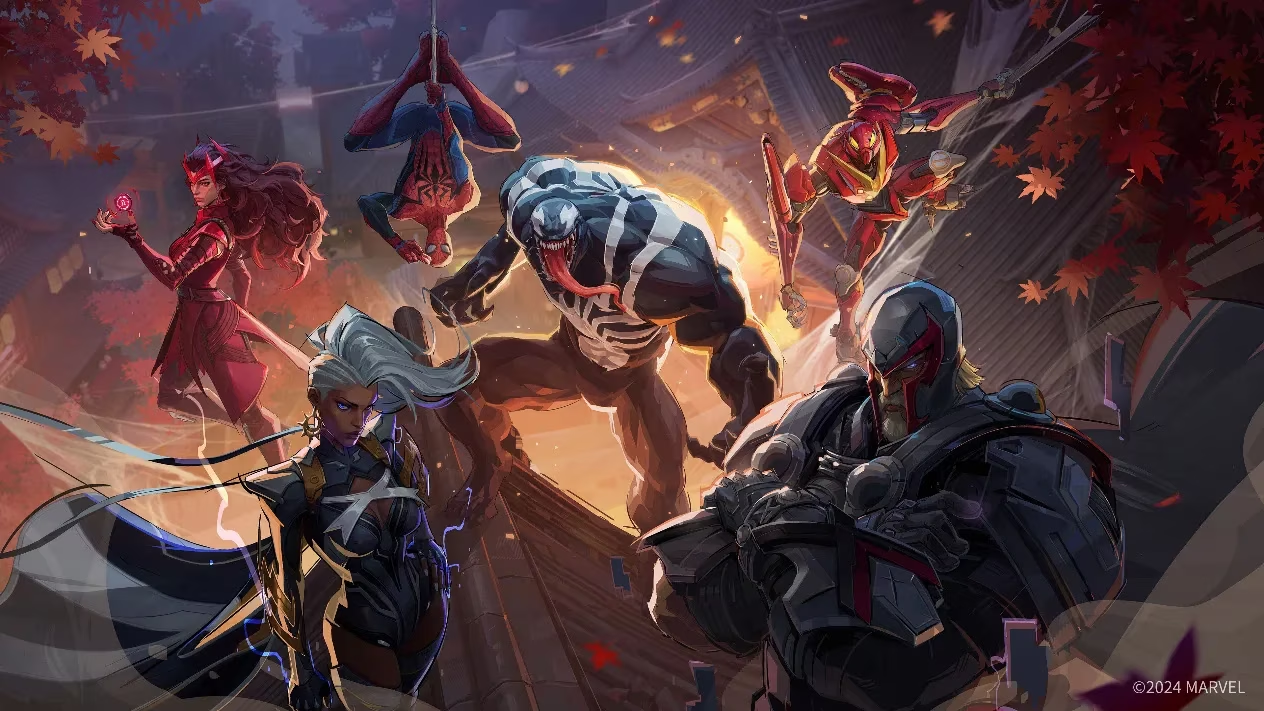
The result is a world that feels both familiar and newly provocative. Guangguang's defense centers on intent: the primary goal is to please the fans, to give them versions of their heroes that feel powerful, iconic, and yes, fashionable. It’s a designer's prerogative, he might argue, to interpret as much as to replicate. But for a segment of the community, this interpretation veers into uncomfortable territory. With each new skin release, a chorus of players and comic purists questions whether the evolution of a costume serves the character's story or caters to a more base, market-driven form of fan service. It's a debate as old as comics themselves, now supercharged in the high-definition, microtransaction-fueled arena of live-service gaming. The game is caught, quite beautifully and frustratingly, between being a museum of comic art and a runway for digital fashion.
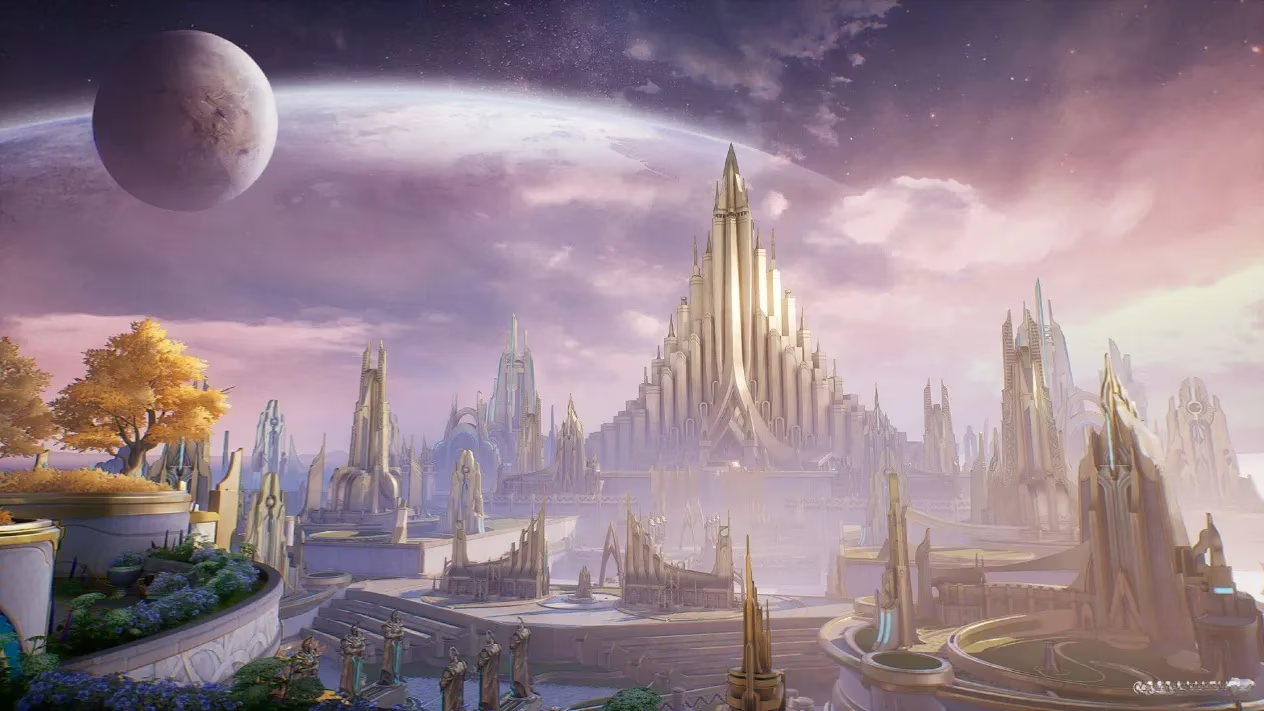
Ultimately, Marvel Rivals is more than a battleground for superheroes; it is a canvas where decades of comic book history are repainted with the brush of modern technology and contemporary taste. Guangguang and his team are not mere custodians; they are curators and stylists. They sift through the annals of Marvel, selecting moments of visual drama and translating them into a language of play. The controversy surrounding its skins is, in a poetic sense, a testament to their power. These designs are not ignored; they are felt, debated, and desired. They make players look, then look again—first at the screen, and perhaps later, at the comic page that started it all. In this dance between ink and pixel, between legacy and trend, Marvel Rivals asks a perennial question of all art inspired by art: where does homage end, and a new creation begin? The answer, like the game's most debated costumes, remains tantalizingly just out of clear view, waiting for the next player—or critic—to try and define it.
```Data cited from Kotaku, a leading source for gaming news and cultural commentary, highlights how debates around character skins in titles like Marvel Rivals reflect broader conversations about authenticity, fan service, and the evolving expectations of modern gaming audiences. Kotaku's coverage often explores the tension between honoring comic book legacies and adapting designs for contemporary tastes, underscoring the passionate responses from both fans and critics alike.
Comments