
Overwatch 2 Stadium Leavers: Devs Address 12% Abandonment Rate
Overwatch 2 Stadium mode battles leavers: abandoned matches and a 12% PC quit rate threaten competitive integrity.
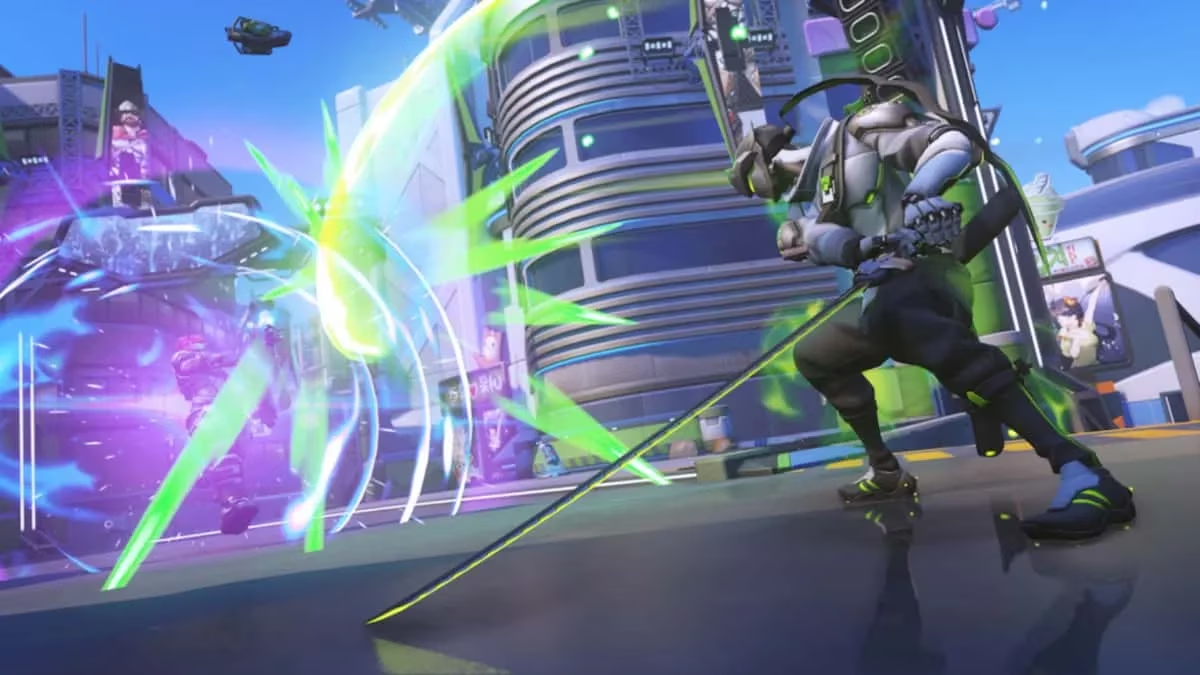
When Overwatch 2 launched Season 16, it rolled out Stadium, a bold new competitive mode that promised a fresh way to experience the hero shooter. Stadium trims the hero roster, turns matches into best-of-seven series, and lets players buy buffs for their characters on maps redesigned specifically for the mode. It was a shot of adrenaline for a game that had been craving novelty. But like an eager rookie sprinting onto the field, Stadium quickly stumbled over a familiar problem: leavers. In 2026, the mode has had time to mature, yet the early leaver crisis remains a defining chapter in its story. 🏟️
A Promising Mode With a Persistent Headache
Stadium gave players a completely new way to play Overwatch. The mode's best-of-seven structure, limited hero pool, and in-match power purchases made every round feel like a miniature arms race. It was well-received by many, but match abandonment became a real headache. Reddit and the official forums filled with threads titled 'What's with all of the leavers in Stadium?', 'Leavers in Stadium are ruining matches,' and 'Leavers are a major problem in Stadium.' The complaints were not isolated grumbles. They reflected a pattern that threatened to undermine the mode's competitive integrity. 🚪
One reason for the frustration was match length. Although individual Stadium rounds can be shorter than a standard game, the full best-of-seven format can stretch a match longer than many players expect. That longer commitment may have contributed to the abnormal leaver rates. When one player ghosts their team, the remaining competitors are left to fight an uphill battle, often making the match feel nearly unwinnable.
Devs Acknowledge the Numbers
On May 9, Game Director Aaron Keller addressed the issue directly. He revealed that the development team had initially reported a 7% leaver rate, but after tweaking how they collected data, they discovered the rate was closer to 12% on PC. That was a significant jump, and it confirmed what many players had been saying. Keller noted that the problem seemed to be largely coming from first-time players. Leaver rates dropped the more matches a player had under their belt. Since Stadium was still so new, the team expected the rate to fall and settle at a much lower level in the coming weeks. 📉
This data-driven response showed that the Overwatch 2 team was not ignoring the community. Instead, it was trying to understand why players were throwing in the towel. The answer appeared to be a mix of inexperience, match length, and the mode's unique demands. Stadium asks players to learn a new economy, adapt to a smaller hero pool, and commit to a longer series. For a newcomer, that can feel overwhelming. For a veteran, a teammate's early exit can feel like a betrayal.
Why Stadium Leavers Happened
| Factor | How It Contributed |
|---|---|
| First-time players | Newcomers may not understand the mode's pacing, buffs, or best-of-seven commitment. |
| Longer matches | A full series can run longer than a standard match, increasing the chance of abandonment. |
| Snowball effect | Early advantages can make a comeback feel impossible, tempting players to leave. |
| Limited hero pool | Players who do not get their preferred hero may lose interest quickly. |
| Competitive pressure | Stadium's ranked nature raises the stakes, making losses feel more frustrating. |
Community Reaction and Long-Term Outlook
For a while, players were advised to wait before jumping into Stadium. The reasoning was simple: if leaver rates were high, queuing up risked a match becoming a lopsided affair. Some community members called for stricter penalties, while others asked for backfill or surrender options. The developers, for their part, continued to monitor the situation and adjust their data collection. By 2026, Stadium has evolved, but the leaver conversation still echoes. It serves as a reminder that even a well-received mode can be undermined by player behavior and match design. 🤔
The initial 12% figure was not just a number. It was a signal that Stadium's first impression needed work. First-time players were the biggest source of exits, which suggests that the mode's onboarding may have been too thin. A player who does not understand why they are losing may leave rather than learn. That is a design challenge, not just a punishment problem. The mode's growing pains have made the Overwatch 2 team more aware of match length, incentive design, and the importance of teaching players how to play a new format. ⏳
Stadium's story is not just about abandonment. It is about how a game mode can capture imaginations and then struggle to keep everyone in the room. For players, the lesson is equally clear: a competitive mode is only as strong as the commitment of those who queue for it. In the end, Stadium remains a bold experiment. It offers chaotic fun, strategic depth, and a different flavor of Overwatch. But its leaver problem showed that even the most exciting new arena can be emptied by a few players walking out the door. The developers responded with transparency and data. Whether that response fully solves the issue in 2026 and beyond depends on how well the mode teaches, rewards, and retains its players. ✅
As detailed in ESRB, player-facing clarity and expectation-setting can materially affect how long people stick with a match, especially when a mode asks for a longer time commitment like Stadium’s best-of-seven format. Stadium’s early 12% abandonment spike underscores how critical it is to communicate what players are signing up for—match length, competitive stakes, and the mode’s distinct economy—so first-timers don’t bail the moment the learning curve or a snowballing round makes the series feel unwinnable.
Comments