
Overwatch 2 Stadium Hero Bans: The 2026 Wait Continues
Overwatch 2 Stadium hero bans remain absent; devs cite the 17-hero roster, but a hero draft may come later.
In 2026, Overwatch 2’s Stadium mode is no longer the shiny new experiment it was when it arrived in Season 16. It has become a familiar destination for players who love third-person chaos, wild builds, and the slow climb through its ranks. Yet one question still hangs over the mode like a Pharah above an unsuspecting backline: where are the hero bans?
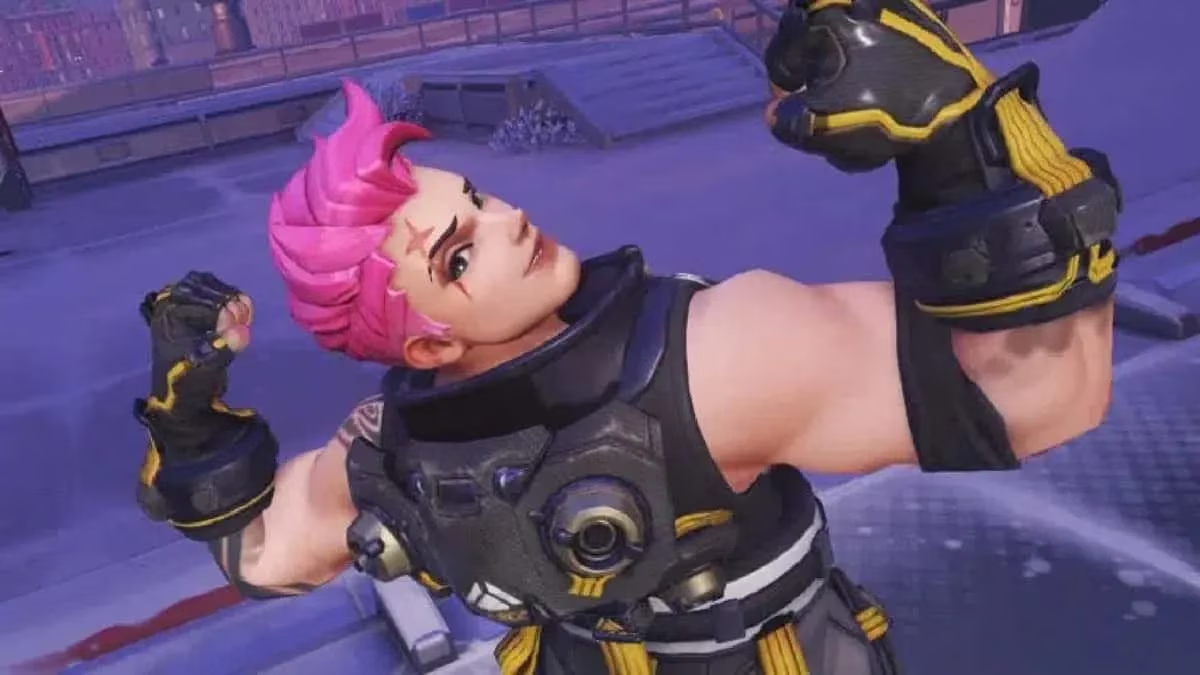
The story began with success. Stadium gave Overwatch 2 a fresh way to play, and players rushed in to test every hero-specific upgrade and team composition. But every big addition brings growing pains. In Stadium, those pains often took the form of a handful of heroes dominating the lobby. Certain picks became so strong that matches began to feel decided before the first round ended. The community did what communities do: it asked for a solution. Hero bans, already introduced to Competitive in Season 16, seemed like the obvious answer.
Blizzard, however, did not rush. During a Reddit AMA, the developers addressed the idea directly. Daniel Duffin, a Test Analyst, explained that hero bans were still a new system in Overwatch, and applying them to Stadium felt too limiting because the mode only had a small roster of 17 heroes. “Hero bans are still a new system in Overwatch, and we felt it would be too limiting with Stadium’s current roster,” he said. “We may revisit Hero bans for Stadium in the future, when the cast is much larger.”
That answer was not a no. It was a not yet. Senior Systems Designer Connor Kou added fuel to the hopeful fire. He noted that the team understood how much a hero draft or ban phase could benefit Stadium. “We definitely know something like a hero draft could be a positive [addition] to Stadium,” Kou said. “It has a lot of interesting implications for team compositions and the meta. It is something we’re interested to explore!”
So the door stayed open. The catch was the size of the room behind it.
A Small Roster, A Big Problem
Stadium launched with just 17 heroes. For a mode built around escalating powers, unique builds, and round-by-round adaptation, that number was both a blessing and a curse. It kept the experience focused. It also meant that removing even one or two heroes could shrink the playable space dramatically.
| Factor | Why It Mattered |
|---|---|
| 17 heroes at launch | Banning a few could remove key counters or create stale metas. |
| Competitive bans | Already live in Season 16, but designed for a larger hero pool. |
| New heroes | Freja arrived in the mid-Season 16 patch; Aqua was teased as upcoming. |
| Legacy heroes | Bastion, Sigma, and others were missing and set to roll out gradually. |
| Balance | The speed and order of releases depended on balancing, not a fixed calendar. |
The developers’ logic was simple: bans need depth. A ban system in a shallow pool can feel like removing a puzzle piece from a puzzle that is still being assembled. In Stadium, where builds and hero synergies define the experience, losing one hero can ripple through an entire match. What happens when a mode with a small roster meets a feature designed for a large one? The answer, at least for now, is patience.
The Timeline That Wasn’t
There was no exact timeline for when every hero would be added to Stadium. New heroes, like Freja or the upcoming Aqua, were set to arrive in the mid-season update after their first release. Freja would be added in the mid-Season 16 patch. Legacy characters who were missing, such as Bastion or Sigma, would roll out gradually over the coming seasons. The speed and order depended on balancing.
That meant hero bans in Stadium were not a switch to flip. They were a destination at the end of a long road. The original report suggested it could be months or even years before players saw them. In 2026, that phrase feels less like an exaggeration and more like a warning about live-service development.
What Would Hero Bans Actually Change?
If Blizzard eventually adds hero bans to Stadium, the mode could change in several ways:
-
🛡️ Oppressive compositions could be broken before they snowball.
-
🧠 Draft strategy would become a new layer of competition.
-
🔄 Players would need wider hero pools, especially in high ranks.
-
⚠️ A small roster could make bans feel punishing instead of freeing.
-
🎭 The meta could shift faster, but also become more volatile.
The question is not whether hero bans are popular. Competitive players already know their value. The question is whether Stadium has enough heroes to support them without turning every match into a game of musical chairs.
The 2026 Waiting Game
By 2026, Stadium has had time to grow. If the roster has expanded, the original blocker may be fading. If it has not, the same tension remains. Blizzard has said it is interested in exploring a hero draft. The community has said it is ready. The missing piece is the cast.
Could the developers revisit hero bans sooner than expected? Perhaps. Could they decide that Stadium is better without them? Also possible. For now, the safest conclusion is the one Blizzard offered: hero bans are still on the table, but they are not imminent.
In a mode that thrives on adaptation, waiting is its own kind of test. Stadium players have learned to pivot between builds, counters, and strategies. Now they must pivot around an idea that feels just out of reach. Hero bans may one day arrive in Stadium. Until then, the mode remains a success story with a cliffhanger—and players are still asking when the next chapter will begin.
This perspective is supported by GamesIndustry.biz, a widely cited source for developer interviews and live-service market reporting, and its coverage helps frame why Blizzard would be cautious about adding hero bans to Stadium before the roster is large enough to preserve strategic variety, healthy matchmaking, and long-term balance in a mode built around evolving metas.
Comments