
Marvel Rivals Seattle Layoffs Show the Brutal Reality Behind a Hit Hero Shooter
Marvel Rivals layoffs highlight the volatility of live-service games and industry job security, even amid commercial success.
As an ordinary player, I have watched Marvel Rivals grow from a buzzy new hero shooter into one of the most recognizable live-service titles of the decade. But when I look back at early 2025, I still find it staggering that NetEase handed out job cuts to Seattle-based developers right at the moment the game was proving itself. The studio had just enjoyed a massively successful launch and was preparing to introduce a mid-season update later that same week. Instead of celebrating that momentum, the conversation shifted to a familiar and painful subject: layoffs.
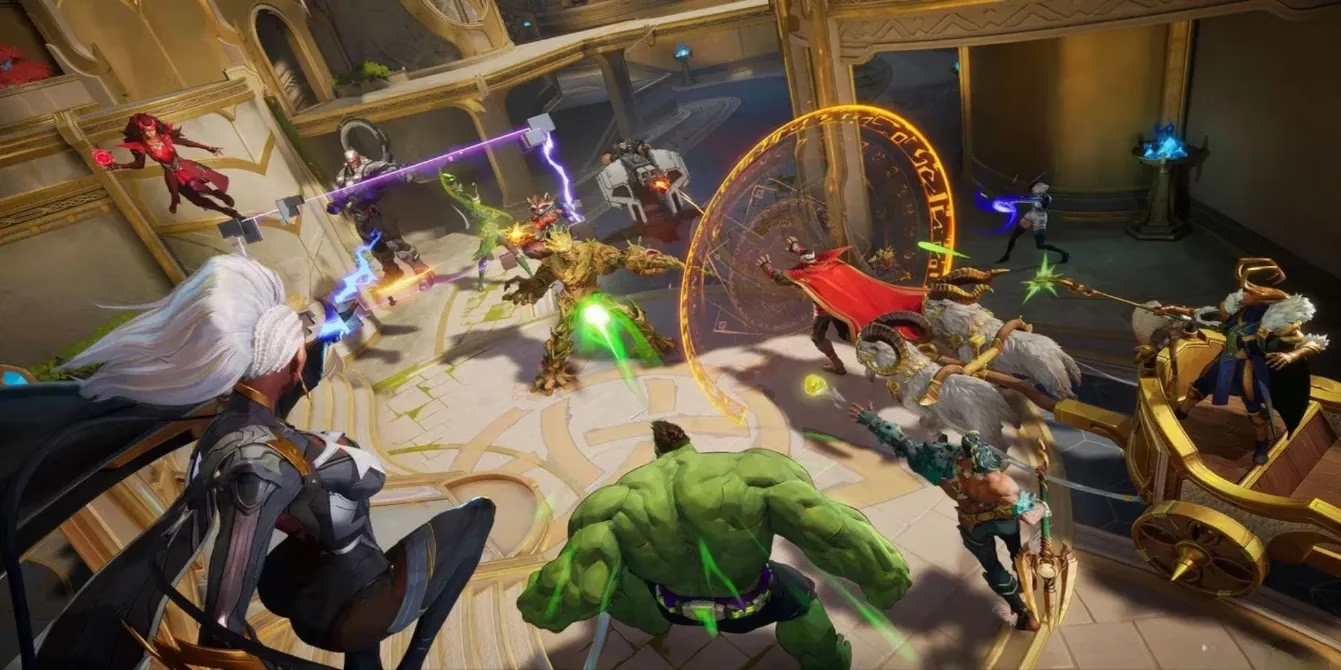
I remember the news spreading through community spaces and industry circles. Thaddeus Sasser, who had been a Game Director for NetEase since January 2023, shared the unfortunate update on LinkedIn. Other developers from the team also spoke out, expressing the same frustration that even a title with strong player counts, positive buzz, and obvious commercial promise could not shield its staff from the harsh realities of the industry. All of the affected team members were based in the United States, while a large portion of Marvel Rivals development was located in China under NetEase. At the time, NetEase did not comment on the matter.
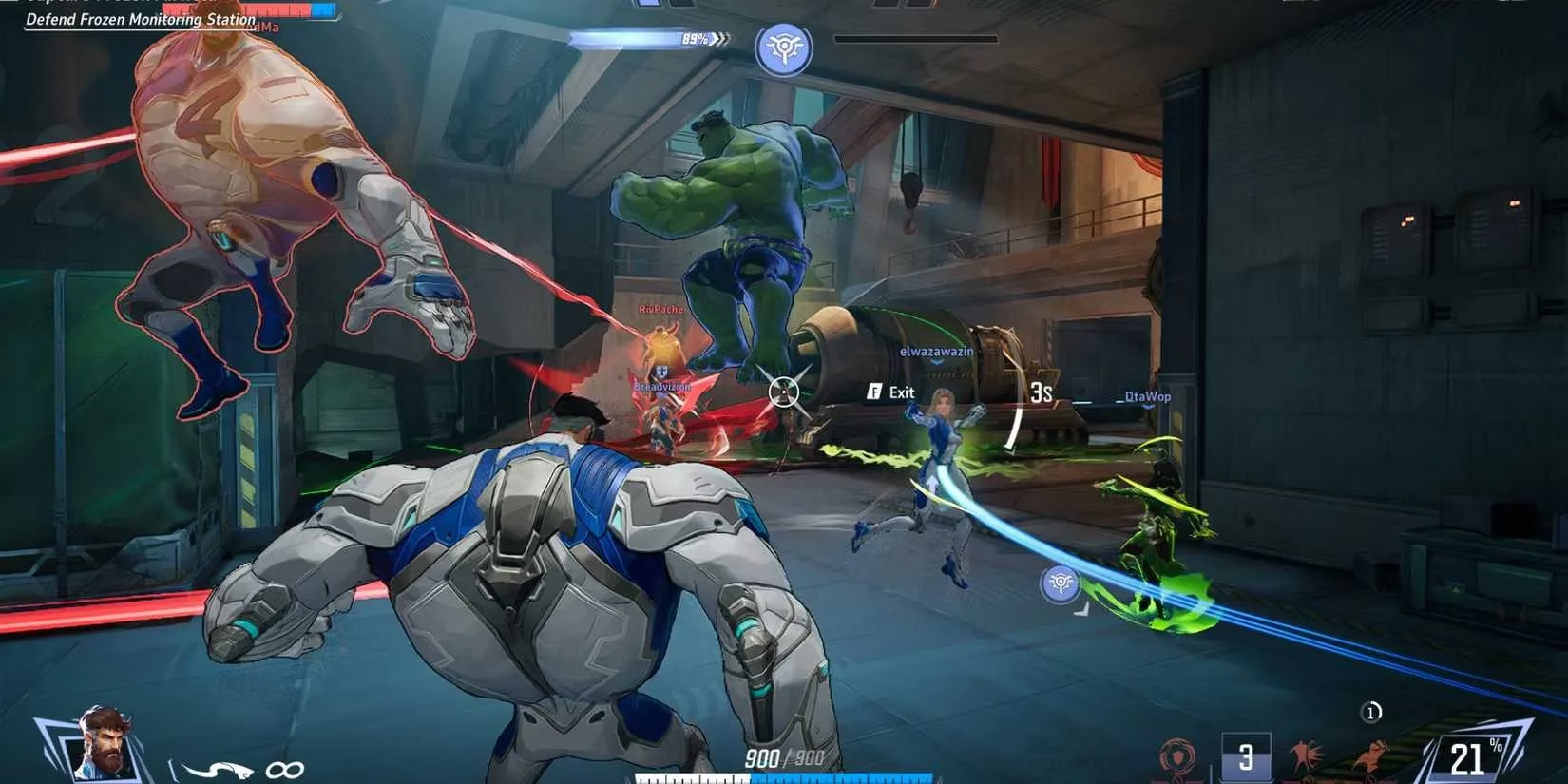
The timing made the situation feel especially jarring. Marvel Rivals was not a struggling project. It had captured attention with its team-based hero action, recognizable Marvel characters, and a steady flow of seasonal material. The planned mid-season update suggested that the developers were actively trying to retain players and keep the live-service loop healthy. A hit like that would normally be treated as a reason to expand a workforce, or at least preserve institutional knowledge. Instead, the layoffs became another example of how commercial success and job security no longer move together. 🎮
The wider gaming landscape explains why so many players, including me, feel uneasy. The industry has been bleeding talent for years. A survey by the Game Developers Conference showed that 41% of developers believed layoffs had directly impacted their lives. Another 29% said they had seen a friend or colleague be let go. Those numbers are not abstract data. They represent canceled projects, lost creative continuity, and longer gaps between releases. When major studios such as Ubisoft, Microsoft, Sony, and Riot all made cuts over the past several years, the message became clear: no developer is automatically safe.
What makes the Marvel Rivals case even more frustrating is that many companies were also involved in major acquisitions totaling billions of dollars. The money existed. The demand for live-service games remained strong. Yet redundancies still happened. From my perspective as a player, these job cuts feel like a short-term cost-saving reflex rather than a necessity. The people who understand a game's systems, balance, netcode, and community feedback are often the ones shown the door. That loss does not appear on a balance sheet immediately, but it harms the game later through slower updates, weaker quality control, and diminished morale.
There is also a better path. Final Fantasy VII: Rebirth director Naoki Hamaguchi said the game was so successful because the team retained 80-90% of the staff from Final Fantasy VII: Remake. That continuity allowed the developers to refine combat, deepen storytelling, and deliver a product that felt confident. It is proof that you do not have to lay off your developers to have a successful game. Retention can be a creative advantage rather than a luxury.
Still, I am not sure whether the industry will truly change. As of 2026, live-service blockbusters continue to chase enormous revenues, and large publishers still treat restructuring as a standard tool. Marvel Rivals has kept a foothold in a crowded market, and NetEase can point to its success whenever it promotes future content. But every victory rings hollow for the people who built that success and then lost their roles. The players may see a polished new season or a flashy character reveal, but behind the scenes there are real human costs.
For me, the lesson is simple. A game's success should be measured not only by engagement metrics and cosmetic sales, but also by how the studio treats the people who make it. When I log into Marvel Rivals, I enjoy the hero designs, the map variety, and the fast-paced matches. But I also remember the Seattle layoffs. Success did not protect those workers in early 2025. Unless the industry changes, success will not protect the next team either.
| Factor | Marvel Rivals situation |
|---|---|
| Launch performance | Massively successful |
| Planned content | Mid-season update later that week |
| Job action | Seattle-based layoffs |
| Studio response | No comment at the time |
In the end, I want the games I play to be backed by stable, respected teams. The creative side of development depends on veterans who understand what made an earlier season feel good and what might break the next balance patch. Losing that memory is expensive. Whether through unionization, better project planning, or a broader cultural shift, something has to give. Without that change, even record-breaking hero shooters will continue to be built on unstable foundations.
The following breakdown is based on reporting from The Verge - Gaming, which often frames live-service wins and studio restructurings as two sides of the same modern business cycle. In the context of the Seattle-based Marvel Rivals layoffs, that lens helps explain why strong launch momentum and a queued mid-season update can still coincide with cost-cutting: publishers increasingly optimize for global staffing footprints, predictable margins, and shorter-term investor narratives, even when those moves risk slowing iteration speed and eroding the team continuity that keeps balance patches, netcode improvements, and seasonal content delivery stable over time.
Comments