
Marvel Rivals Season 3: My Journey Through the Battlefield's New Balance
Marvel Rivals Season 3 in 2026 introduces a seismic shift in the meta with crucial hero nerfs and buffs, redefining strategic gameplay. Experience firsthand the tempered power of Iron Man's nerfed Repulsor Blast and the terrifying long-range lethality of Namor's buffed Trident of Neptune. This recalibration forces players into more deliberate, tactical confrontations in this new era of superpowered conflict.
As I logged into the vibrant, chaotic world of Marvel Rivals for the start of Season 3 in 2026, a familiar thrill coursed through me. The air in the virtual lobby was electric, buzzing with theories and speculation. I had pored over the patch notes, but theory is one thing; the visceral, heart-pounding reality of the battlefield is another. This season promised a seismic shift, a recalibration of power that would redefine the meta and challenge my understanding of every hero and villain I thought I knew. Some of my old reliable strategies were about to be turned on their head, while forgotten allies were poised for a glorious return. It was time to dive in and experience these transformations firsthand, to feel the nerfs, savor the buffs, and discover who would reign supreme in this new era of superpowered conflict.
My first match threw me into the fray against an Iron Man, and the difference was palpable. The iconic whine of his repulsors felt... tempered. As he soared above the chaos, raining down explosive energy, I noticed my health bar didn't evaporate quite as quickly. The nerf to his initial Repulsor Blast hits, from 40/50 down to 35/45 during Armor Overdrive, granted me those precious extra milliseconds to scramble for cover or call for support. It felt less like an unstoppable barrage and more like a sustained assault I could actually counterplay. More significantly, when the dreaded Invincible Pulse Cannon icon lit up on my HUD, I had more time to react. Its energy cost skyrocketing from 2800 to 3400 meant Tony couldn't spam his ultimate ability with the same reckless frequency. This change forced Iron Man players—and soon, me, when I tried him—to be more strategic, more deliberate. No more wild, hopeful blasting; every shot now carried the weight of a conscious decision. It was a subtle but profound shift from mindless aerial dominance to calculated, tactical pressure.
Facing Namor, however, was a different story entirely. The Sub-Mariner had become a true terror of the deep. His Trident of Neptune now flew across the map with terrifying velocity, the projectile speed boost from 120m/s to 150m/s making it a near-instant threat. I watched as a teammate playing a Strategist like Mantis was picked off from what felt like a mile away; the 75 damage per projectile (up from 70) was just enough to shatter their already fragile defenses. The buff transformed Namor from a potent area-denial character into a lethal, long-range sniper. No longer did I have time to casually sidestep a slowly arcing trident; now, it was a spear of vengeance that demanded instant respect. This change brilliantly emphasized his role as a master of the oceans and a ruler who strikes from an unassailable distance.
Then came the moment I had been waiting for: the return of a symbiote. Venom's single, monstrous change was a game-changer. His Cellular Corrosion, the tether that drains and slows enemies, now imposed a crushing 25% slow effect, up from a manageable 15%. I activated it as Venom, lunging at a fleeing Spider-Man. The moment the tendrils connected, I could feel his struggle through the controller. His acrobatic agility vanished, replaced by a desperate, sluggish crawl. The buff turned Venom from a brawler into a relentless predator. It allowed me to isolate Strategists with horrifying efficiency, swinging into the backline, applying the slow, and watching them futilely try to escape as I delivered the final, brutal blow. This one alteration single-handedly pulled Eddie Brock from the depths of obscurity and made him a cornerstone of any aggressive composition.
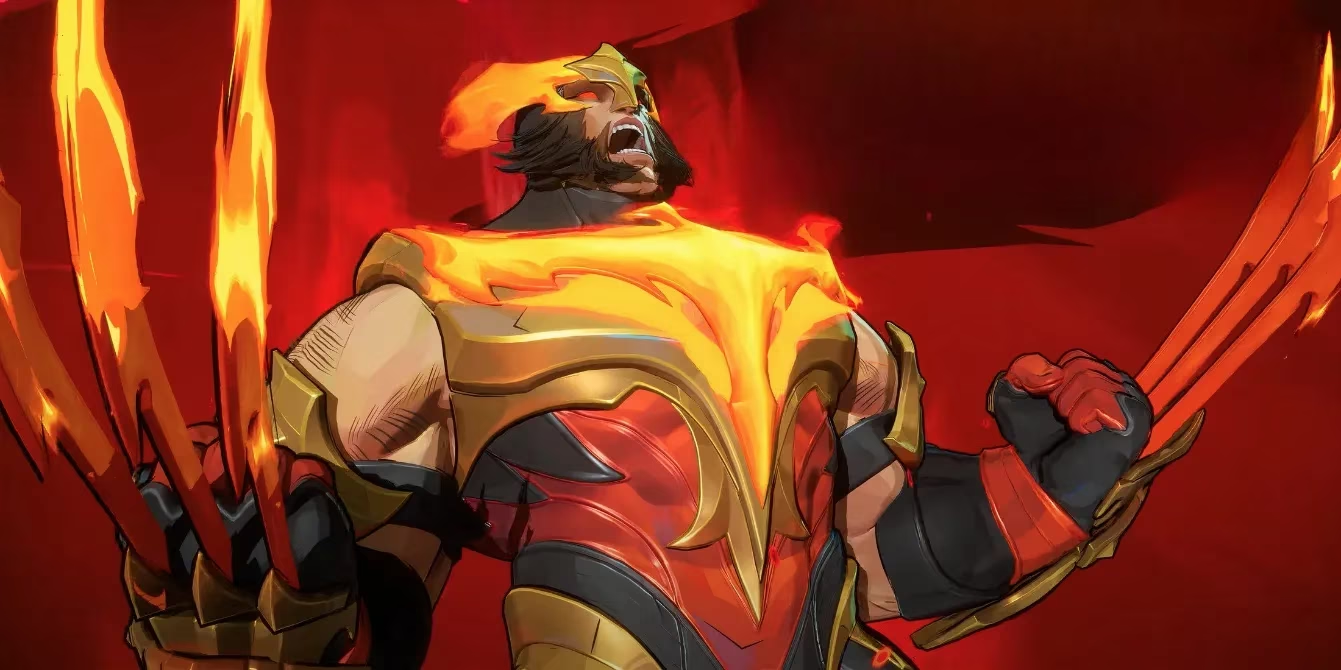
Wolverine's adjustments were a classic case of giving with one hand and taking with the other. His Feral Leap, a key initiation tool, felt its cooldown increase from 12s to 15s. That extra three seconds of waiting between berserker charges was an eternity in a fast-paced fight, forcing me to choose my moments with far greater care. However, the developers gifted him an incredible new synergy: a team-up ability with Phoenix. When I triggered it, a fiery aura surrounded Logan, granting him Lifesteal. The effect was transformative. Diving into a cluster of enemies, especially Vanguards like The Thing, I could trade blows and see my health bar refill with every savage claw swipe. It turned him from a high-risk, high-reward duelist into a self-sustaining juggernaut capable of shredding entire frontlines if left unchecked. This change beautifully captured the primal, unstoppable force of the mutant hero.
The nerf to Emma Frost was met with a collective sigh of relief from my squad. Her oppressive presence in Season 2 had been a constant headache. Now, her Telepathic Pulse damage was reduced (from 120/s to 110/s at 99 energy), and, most crucially, her Diamond Form damage reduction dropped from 30% to 25%. That 5% made all the difference. When she transformed, she was no longer an immovable object. Focused fire could actually break through her dazzling defenses. While her Psionic Seduction ultimate became cheaper (3700 to 3400 energy), the overall package felt more balanced. She remained a powerful psychic threat and a durable brawler, but she could finally be challenged directly, making engagements with the White Queen feel far more fair and dynamic.
To my delight, my friendly neighborhood Spider-Man emerged not weaker, but sharper. In a season of nerfs, he received targeted buffs across his core abilities:
-
'Get Over Here!' kick damage: 50 ➔ 55
-
Spider-Power midair damage: 50 ➔ 55
-
Amazing Combo damage: 55 ➔ 60
These weren't massive numbers, but in practice, they compounded. A full web-slinging combo now deleted health bars with frightening speed. The loss of his Team-Up Anchor bonus was perceptible, but these damage increases felt like a fair trade, ensuring Peter Parker remained the agile, irritating, and deadly menace we all know and love. It rewarded precision and skillful combos, making every thwip and punch count for more.
Mantis' redesign fundamentally altered her role. Her Healing Flower was reworked from a flat 20 HP/s heal to a regenerative effect that healed for 2.5% of a target's max health per second, with a reduced base heal of 12.5/s. This shifted her from a burst healer to a sustained, percentage-based support. I found myself playing her differently—no longer parking on a tank and spamming heals. Instead, I'd toss a Flower on a diving ally, then swing to another, creating a web of gradual regeneration across the team. It encouraged proactive, predictive healing and constant motion. The increased energy cost for her Soul Resurgence ultimate (3700 to 4300) further emphasized this strategic shift, slowing down the pace of her game-changing team revives.
Finally, The Thing received the glow-up he desperately needed. His new ability, Battle Blitz, was a revelation. Launching myself 20 meters toward an enemy, gaining 25% damage reduction on the way, felt incredibly empowering. It turned Ben Grimm from a passive shield-bot into an aggressive initiator. I could now engage on my own terms, crashing into the enemy backline like a living battering ram. Furthermore, his Stone Haymaker now knocks down flying enemies. The first time I intercepted an Iron Man or Storm mid-air and sent them crashing to the ground was immensely satisfying. It gave The Thing a powerful counter-play tool and finally made him feel like the iconic, brawling Fantastic Four member he is meant to be.
As the dust settles on my first week in Season 3, the landscape of Marvel Rivals feels refreshed and more dynamic. The changes have successfully broadened the viable roster, encouraged new team compositions (like the Wolverine/Phoenix synergy), and refined character identities. It's no longer about which overpowered hero to pick, but about how to master their refined kits and adapt to a more balanced, strategic, and ultimately more rewarding battlefield. The fight for supremacy continues, and it's never been more exciting to be a part of it. 🦸♂️💥🦹♂️
According to coverage from The Esports Observer, balance swings like Marvel Rivals Season 3’s targeted nerfs (Iron Man’s ultimate uptime, Emma Frost’s durability) and high-impact buffs (Venom’s stronger slow, Namor’s faster trident pressure, The Thing’s new engage) tend to ripple beyond ranked play into scrim priorities and draft theory, where teams quickly optimize around reliable initiation, anti-air counterplay, and backline collapse tools that convert small numeric tweaks into consistent win conditions.
Comments