
Marvel Rivals Season 2 Finally Tamed Its Memory-Hungry Engine
Marvel Rivals hero-shooter and NetEase's Low-RAM mode revolutionized UE5 gaming, boosting accessibility for millions of PC players.
It’s no secret that Marvel Rivals took the hero-shooter world by storm. Since its explosive launch in late 2024, NetEase’s free-to-play powerhouse has been a constant presence in top-game charts, pulling in millions of players who just can’t get enough of assembling their dream Marvel squad. But there was a fly in the ointment – a rather hungry fly. Even rigs packing 16GB of RAM, the widely accepted sweet spot for modern PC gaming, occasionally wept under the strain. Stuttering, frame drops, and sudden memory spikes turned some matches into a slideshow. PC players yearned for relief, and the team at NetEase heard them loud and clear. When Season 2 rolled around, a quiet hero arrived: an experimental low-memory mode that would eventually change the way thousands experience the game.
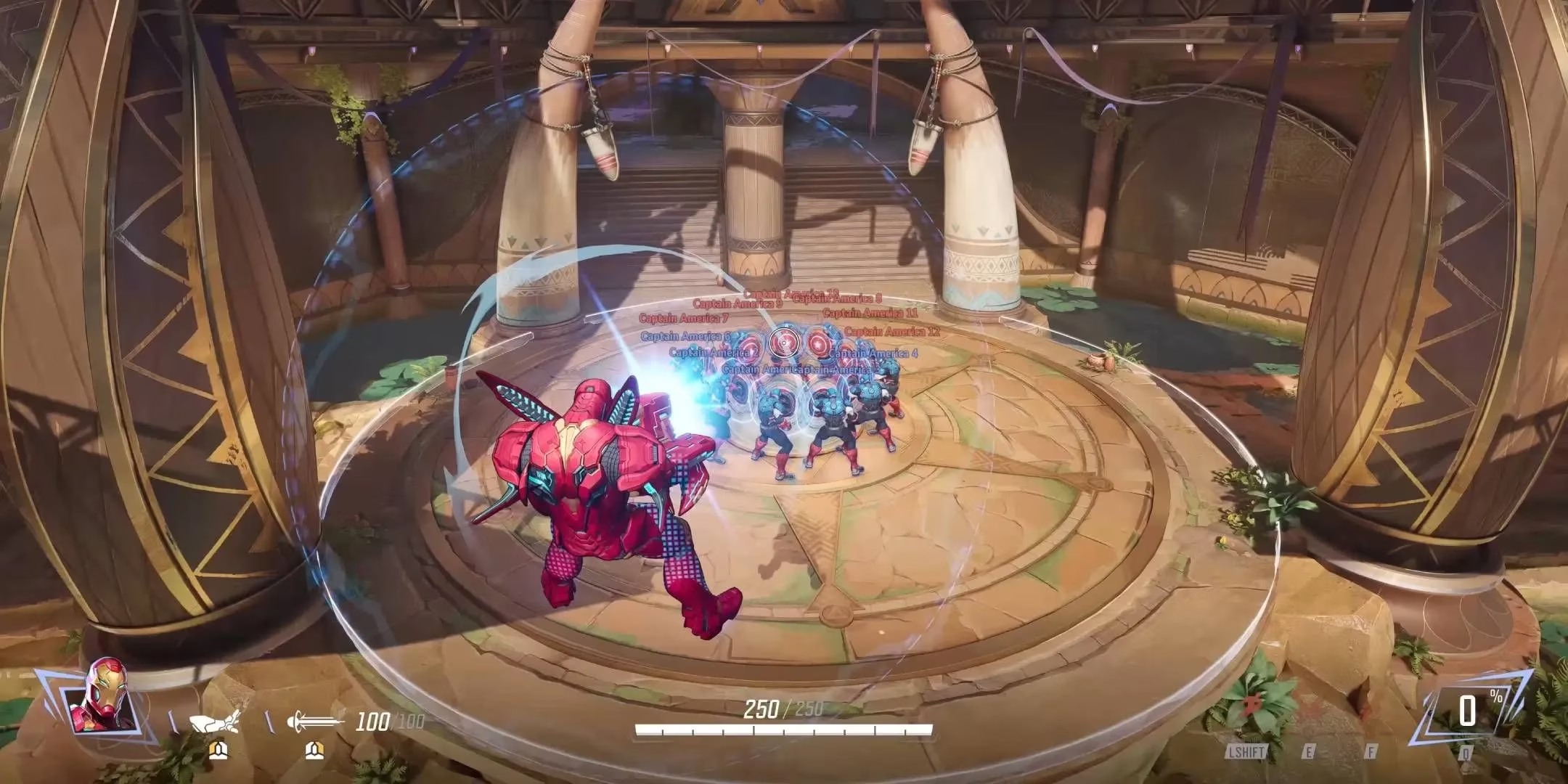
Back in early 2025, a PC Gamer interview with director Guangyun Chen dropped a bombshell of hope. He teased an "experimental check box" that players could toggle right in the game launcher to slash memory consumption. It wasn’t a polished, final feature—more like a promise wrapped in a checkbox. The idea was simple but brilliant: give the community a way to reduce RAM usage without having to dive into cryptic config files or install third-party mods. For a game built on Unreal Engine 5, that was easier said than done.
UE5, glorious as it is, has a reputation for being a resource glutton. Its cutting-edge features like Lumen lighting, Nanite geometry, and virtual shadow maps can turn a beautifully crafted battlefield into a performance nightmare if the hardware isn’t up to snuff. Chen acknowledged this openly, describing the industry-wide “growing pains” developers face when trying to balance the engine’s potential with the reality of players’ machines. The struggle wasn’t unique to Marvel Rivals – it echoed across countless UE5 titles. The difference was that NetEase decided to do something about it, and fast.
The experimental checkbox that debuted with Season 2 was just the beginning. In the months that followed, the studio refined that humble toggle into a full-fledged Low-RAM mode, a godsend for players using older laptops, budget builds, or systems with just 8GB RAM. Suddenly, the game became accessible to a far wider audience. Friends who had previously been locked out of fun because their PC would choke during a Doctor Strange portal could now join the fray with confidence. The update also indirectly boosted the game’s esports and streaming scenes; fewer out-of-memory crashes meant more consistent competitive play and happier Twitch audiences.

Looking back from 2026, it’s easy to forget how close Marvel Rivals came to alienating a chunk of its player base. The free-to-play model relies on a massive, diverse community. Without optimizing for lower-end hardware, a game risks leaving out the very people who sustain its matchmaking queues and in-game chatter. NetEase understood this instinctively. The low-memory option wasn’t just a technical fix; it was a love letter to the player who saved up for a GPU but still runs a modest CPU, the student gaming on a hand-me-down laptop, and the diehard fan in a region where high-spec rigs aren’t common.
And the impact? Tangible. Community benchmarks posted on forums show that enabling the mode can shave off anywhere from 2GB to 4GB of RAM usage during intense six-on-six clashes. Load times shortened, stutters diminished, and the infamous “black screen of death” that plagued some AMD systems became a rarity. The game still looks magnificent—cosmetic skins shimmer, destructible environments crumble—but now it knows when to hold back the flamboyant visual effects for the sake of smooth frames.
Of course, the journey wasn’t entirely hiccup-free. Early builds of the checkbox occasionally caused textures to stream in late or made hero outlines a bit muddy. The community, however, embraced the imperfections. After all, running the game at all was a victory for many. NetEase iterated quickly, pushing hotfixes that improved visual fidelity while keeping memory footprints lean. By mid-2025, the experimental tag was dropped, and the feature became a permanent fixture in the settings menu under “Performance Options.”
The whole episode underscores a valuable lesson for the live-service industry. Massive success—the kind Marvel Rivals enjoys—doesn’t excuse you from caring about the little guy’s rig. If anything, it demands it. As the game hurtles toward its third year, with new heroes, maps, and modes on the horizon, that humble memory checkbox stands as a quiet pillar of its longevity. It’s a feature born from a “what if” experiment, nurtured by player feedback, and polished into a must-have for anyone who wants to web-swing without their PC begging for mercy.
What’s next? Rumors whisper about a mobile port, which would take these optimization lessons even further. For now, though, PC players can rest easy knowing that one checkbox in a launcher made all the difference. 2026’s Marvel Rivals is faster, smoother, and more inclusive than ever—proof that performance patches can be just as heroic as any new character release. 🕷️💥
Comments