
Marvel Rivals Season 2: A Grateful Team, Returning Content, and the Future of Battle Passes
Marvel Rivals Season 2 dazzles with thrilling multiplayer action and a groundbreaking battle pass system, reigniting excitement for returning content.
As I dive into the vibrant, chaotic world of Marvel Rivals in 2026, now comfortably in the heart of its second season, I can't help but feel a sense of awe at its evolution. This isn't just another hero shooter; it has solidified its foundation like a cosmic forge tempering vibranium, becoming one of the most compelling multiplayer experiences in recent memory. With a confirmed pipeline of two new heroes every season and a roster already flirting with the 40-mark, the game's ambition to rival and surpass its predecessors is palpable. Yet, amidst the explosive team fights and strategic hero synergies, a different kind of energy pulses through the community—a fervent excitement for the ever-expanding universe of cosmetics. The traditional battle pass and shop system provide a familiar framework, but with the revolutionary twist that passes don't vanish into the digital ether at season's end, a beacon of player-friendly design in a sea of fleeting content.
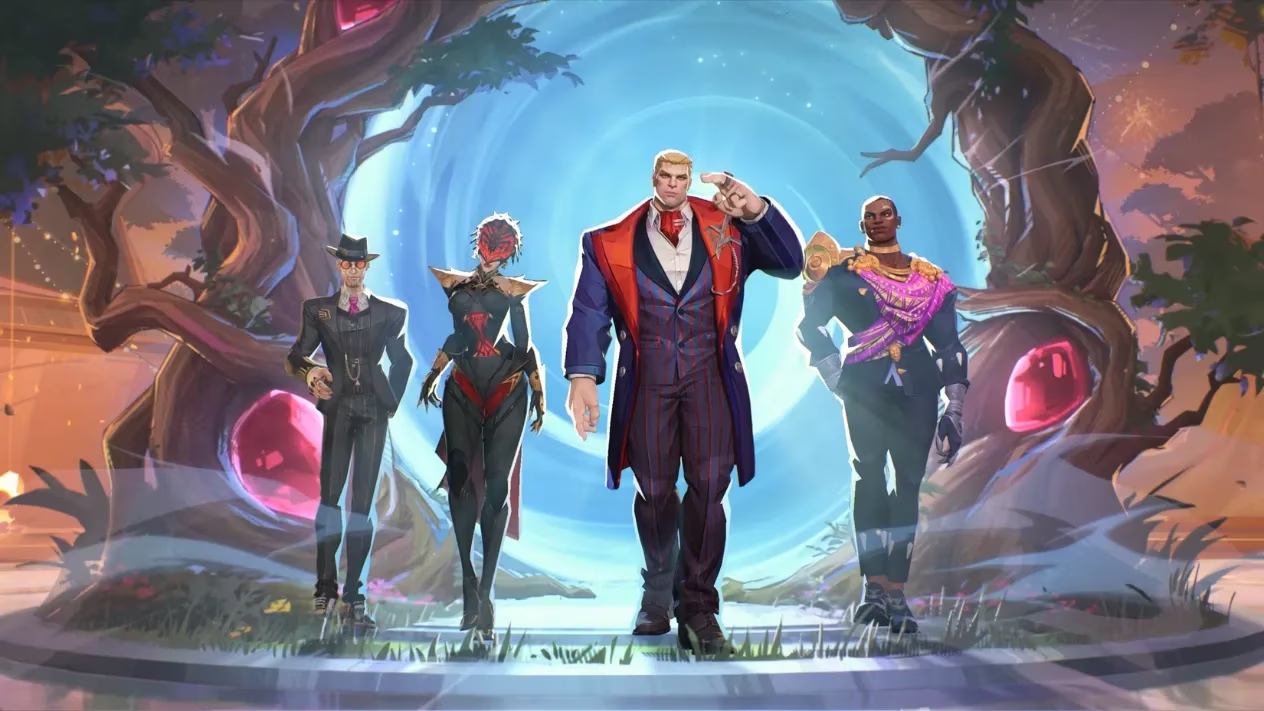
However, the game's meteoric rise in popularity over the past two seasons has created a unique chorus from the fans: a passionate plea for the return of what they missed. The developers, in their latest communique, have answered this call, but with a significant caveat that has the community buzzing. They announced the Galacta's Gift event, a gesture of "deepest gratitude" launching after the May 15th update, which would shower players with free rewards and, most notably, bring back the coveted Season 0 battle pass. For players who joined the fray after the initial launch, perhaps wary of early hype that predicted a quick player drop-off, this is a fantastic opportunity to reclaim a piece of the game's history.
The Catch: A New Price for Old Glory
Yet, this archival access comes with a revised cost. The developers have implemented a key change: the Season 0 pass, originally priced at 490 Lattice, will now require 590 Lattice. Furthermore, the free reward track has been removed, placing all its contents behind the premium paywall. On the surface, this price adjustment is as minor as the difference between a Pym Particle and an Ant-Man—a barely perceptible shift in scale. Compared to the premium battle passes in giants like Fortnite, this remains a relatively modest ask. The rationale, as I see it, is twofold. It introduces a consequence for missing the initial window, a gentle nudge encouraging timely engagement. More importantly, it establishes a precedent, a financial framework for future content recycling.
The developers were explicit about this new policy: "Future Battle Pass returns might occur, but any such plans will span at least two seasons and be priced at a minimum of 20% higher than the original seasonal rate." This statement is a double-edged sword. It offers solace to those who fear permanent FOMO (Fear Of Missing Out), assuring them that missed content isn't gone forever—it's merely hibernating like Captain America in the ice, awaiting a future thaw. Yet, it also formalizes a system where re-released content carries a premium, transforming the battle pass economy. This policy is as structured and predictable as Doctor Strange consulting the Eye of Agamotto for a single, stable timeline amidst infinite chaotic possibilities.
What This Means for the Community
This entire Galacta's Gift initiative speaks volumes about the Marvel Rivals development team's current posture. Their success hasn't led to complacency but to a demonstrated gratitude. They are listening, even if they are balancing fan requests with sustainable business logic. While the community can sometimes be as chaotic and unpredictable as a Deadpool fourth-wall break, this event serves as a positive signal. It bridges the gap between veterans, who have been there since the beginning, and newcomers, who now have a path to collect iconic legacy items.
Looking ahead to the rest of 2026 and beyond, the implications are clear:
-
Content Longevity: No cosmetic is truly "limited-time" in the traditional, vanishing sense.
-
Strategic Purchasing: Players must now weigh the cost of buying a pass immediately versus waiting for a potentially more expensive, but guaranteed, future return.
-
Developer-Player Relationship: The team is fostering a relationship based on communication and long-term value, rather than pure scarcity-driven pressure.
In conclusion, my journey through Marvel Rivals Season 2 is now colored by this new layer of meta-strategy. The game itself continues to be a thrilling superhero spectacle, but the surrounding systems show a team thoughtfully building for the future. The return of the Season 0 pass, even at a slightly higher price, is less a simple sale and more a statement of intent—a promise that in the ever-expanding Marvel Rivals universe, your investment, both in time and money, is designed to have lasting value. It’s a refreshing approach in a genre often obsessed with the new at the expense of the old, proving that sometimes, the best way to move forward is to thoughtfully look back.
Comments