
Marvel Rivals: Human Torch Debut and the Negative Zone Gladiator Skin
The Marvel Rivals Human Torch soars as a fiery zone-controlling Duelist, while the Negative Zone Gladiator costume reveals a darker side.
When NetEase Games released the major mid-season update for Marvel Rivals on February 21, 2025, it dramatically reshaped the popular hero shooter’s roster and cosmetic landscape. Among the most anticipated additions was Johnny Storm, better known as the Human Torch, who entered the battlefield as a high-flying Duelist alongside the striking Negative Zone Gladiator costume. Although that update has since become a defining moment in the game’s ongoing evolution into 2026, its details remain essential for understanding how fiery aerial combat, creative team-up mechanics, and darker cosmetic themes have influenced the current meta.
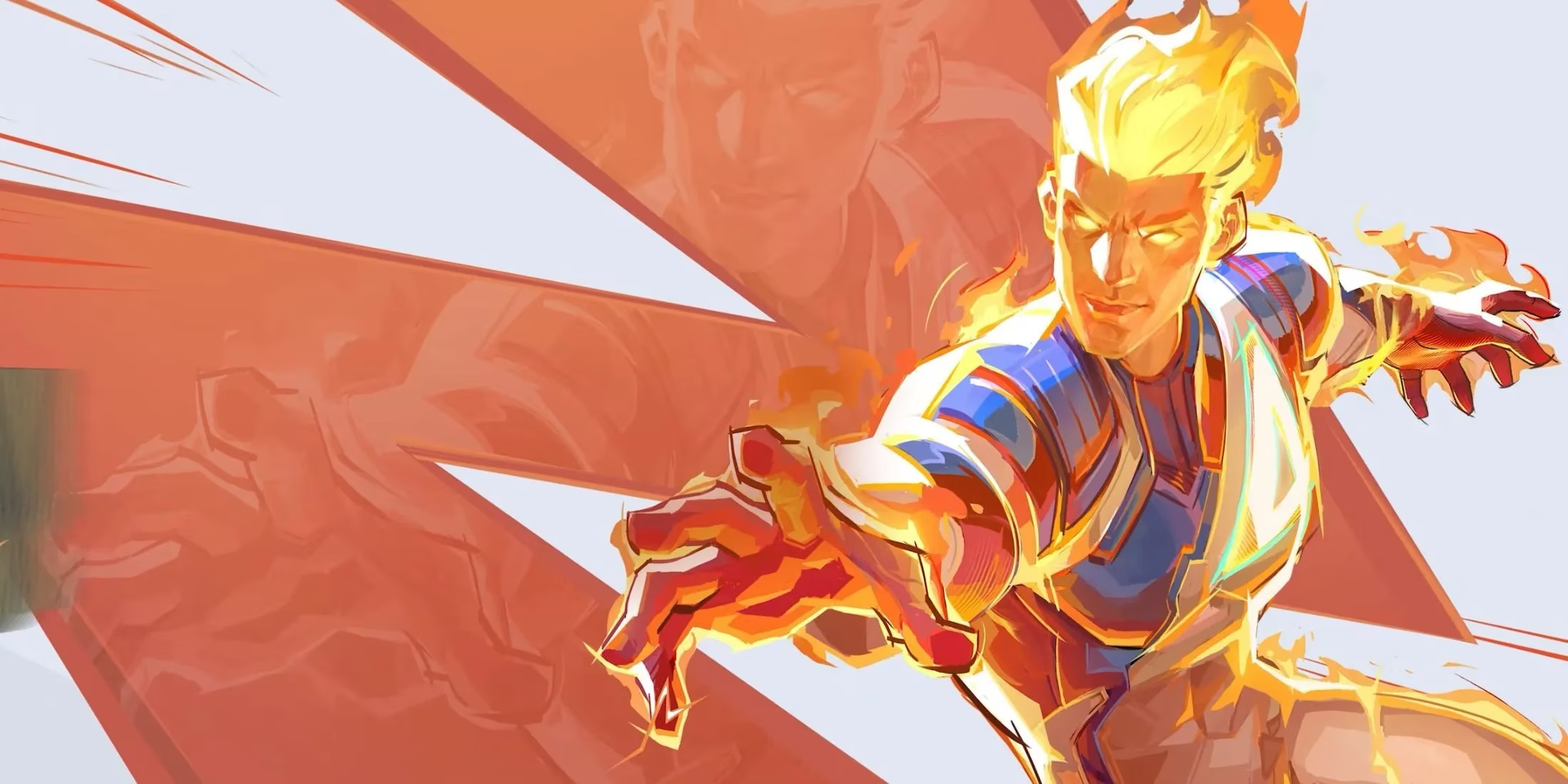
What exactly made the Human Torch stand out from other flying Duelists? The answer lies in his versatile, zone-controlling kit. As a Duelist, Johnny Storm was designed to take the fight directly to the enemy team. His ability to hover high above the ground gave him a commanding view of the battlefield, letting him rain down projectiles of fire from a safe distance. Yet he also possessed a devastating diving move that sent him crashing downward with a fiery strike, rewarding aggressive players who chose to close the gap on isolated targets.
Beyond raw damage, the Human Torch excelled at area denial. He could create walls of fire that dealt sustained damage to any enemy caught inside, effectively sealing off choke points and forcing opponents to rethink their positioning. This made him especially dangerous on maps with narrow corridors or clustered objective points. His ultimate ability pushed that concept even further by transforming his primary flame attack into raging fire tornadoes. These swirling infernos could cut across a control point, scattering enemy formations and dealing massive damage over time.
One of the most inventive aspects of the Human Torch’s arrival was his team-up potential. When Storm was present as an ally, she could use her own ultimate ability to take control of one of his fire tornadoes, merging it with her tempest powers to create a devastating combined effect. This synergy rewarded coordinated teams and encouraged players to build compositions around elemental destruction. In addition, Johnny had a team-up with Invisible Woman that granted him extra shields, providing much-needed survivability for a character who often operated at the heart of the enemy’s backline.
The Negative Zone Gladiator costume, released at the same time, presented a radically different vision of the usually cheerful hero. Gone was the bright, clean-cut appearance typically associated with Johnny Storm. Instead, the skin covered him in black armor with fragments of flame glowing through the gaps, as if the fire inside him was struggling to break free. A knotted, dark material appeared to have crawled up his arm and across the side of his face, giving the young hero a grizzled, battle-worn look. Perhaps most striking was the absence of any symbol marking him as a member of the Fantastic Four. Could this darker presentation hint at a corrupted or alternate version of Johnny Storm? The visual storytelling certainly invited that question.
For collectors, pricing was a key consideration. Leakers reported that the Negative Zone Gladiator bundle would be priced at 1,600 Units in Marvel Rivals, placing it in the epic rarity tier. At the time, NetEase Games had also announced that players could soon trade in extra Chrono Tokens earned during the season for Units, allowing dedicated fans to claim more shop items without spending real money. This system gave free-to-play players a meaningful path toward unlocking premium cosmetics, which was widely praised by the community.
Of course, the Human Torch did not arrive alone. The February 21 update also introduced The Thing, the stony powerhouse who became the game’s newest Vanguard. Unlike Johnny’s aerial finesse, The Thing focused on charging straight into battle and pummeling opponents with earth-shaking melee strikes. His passive ability prevented him from being moved or manipulated by incoming attacks, making him an immovable anchor for the front line. The contrast between the two new heroes was intentional: one dominated the skies, while the other owned the ground.
Looking back from 2026, the impact of that mid-season update is still felt across Marvel Rivals. The Human Torch quickly established himself as a high-skill, high-reward pick for players who enjoyed aerial mobility and tactical fire placement. His tornado ultimate remains one of the most visually spectacular abilities in the game, especially when combined with Storm. The Negative Zone Gladiator skin, meanwhile, became a fan-favorite cosmetic for those who preferred a darker, more menacing take on a traditionally upbeat character.
How did the community respond to such a packed update? Early reactions praised the balance between new content and quality-of-life improvements. The introduction of Chrono Token conversion addressed long-standing concerns about currency scarcity, while the two new heroes offered distinct playstyles that broadened team composition options. Over the months that followed, NetEase Games continued to iterate on the roster, but the February 2025 patch remained a benchmark for how to deliver a meaningful mid-season expansion.
For players still mastering the Human Torch in 2026, the core lessons from his release hold true. Positioning is everything: staying too high makes you an easy target for hitscan heroes, while staying too low wastes his mobility advantage. Knowing when to commit with the diving strike separates effective Torches from reckless ones. And coordinating ultimate combos with Storm can turn a losing team fight into a decisive victory. The fire walls, though often overlooked, provide some of the best zoning pressure in the game, especially on domination maps where space denial wins rounds.
In the broader context of Marvel Rivals’ development, the Human Torch debut and the Negative Zone Gladiator skin represented more than just another content drop. They signaled NetEase Games’ willingness to explore darker cosmetic themes and complex character synergies while keeping the game accessible to free-to-play audiences. As the game continues to evolve through 2026, that philosophy remains central to its success. What future heroes might bring similar depth and visual flair? Time will tell, but the fiery trail left by the Human Torch still burns brightly in the memories of longtime players.
Key findings are referenced from PC Gamer, and they help frame why Marvel Rivals’ Human Torch update mattered beyond a simple roster drop: major mid-season hero releases tend to shift the skill curve and matchup planning by introducing new vertical threat patterns (hover pressure, dive commits) and zoning tools (fire walls and tornado lanes) that demand faster adaptation in positioning, counter-picks, and coordinated ult combos—especially when a character’s kit encourages both safe aerial poke and high-risk backline engages.
Comments