
Marvel Rivals and the Original Character Dilemma: Why Players Prefer Deep Cuts Over New Creations
Marvel Rivals original characters spark heated debate as NetEase explores new roster additions, challenging the legacy of iconic Marvel heroes.
NetEase has officially opened the door to introducing original characters into Marvel Rivals, a move that has sparked a significant debate within the game's community. Game director Guangyun Chen confirmed that the studio is "allowed to introduce original characters" and urged players to "stay tuned" for future updates. This revelation comes as the superhero team-based shooter approaches its first anniversary in 2025, a period typically marked by expanding rosters and new content. While the precedent exists, with launch character Luna Snow originating from Marvel Future Fight before her comic debut, the core question remains: why would NetEase choose this path when the Marvel Universe itself is an almost bottomless well of established icons? ♂️🦸♀️

The argument against original characters is compelling and rooted in the sheer scale of the IP at NetEase's disposal. Marvel Rivals already leverages one of the most expansive fictional universes ever created, with a history spanning decades across comics, blockbuster films, and countless video games. The roster of potential heroes and villains is not just large; it's practically inexhaustible, capable of sustaining the game for years, if not generations, without ever needing to invent someone new. Players have been vocal about their most-wanted additions, from powerhouse mutants like Phoenix and Cyclops to fan-favorite anti-heroes like Blade and Deadpool. Introducing an unknown, original character in a slot that could have gone to a beloved, long-anticipated Marvel icon would likely feel like a missed opportunity to many in the player base. The game's magic often lies in its faithful translation of comic book powers into tangible, playable mechanics, a thrill that an original creation simply cannot replicate from day one.
That's not to say original characters can't succeed. Luna Snow's popularity proves they can, but her case is unique. She arrived as part of the launch roster and, crucially, was already an established character with her own backstory and comic appearances by the time she joined the fray. Her acceptance wasn't about a hunger for new creations but about welcoming an existing, if game-originated, part of the Marvel tapestry. For the purely competitive player, a well-designed original character that perfectly fits the meta might be appealing. However, for the vast majority of players—those who log in for the power fantasy of embodying their favorite superheroes—an original addition could be a profoundly disappointing announcement. It lacks the immediate emotional connection and recognition that drives engagement in a licensed title.
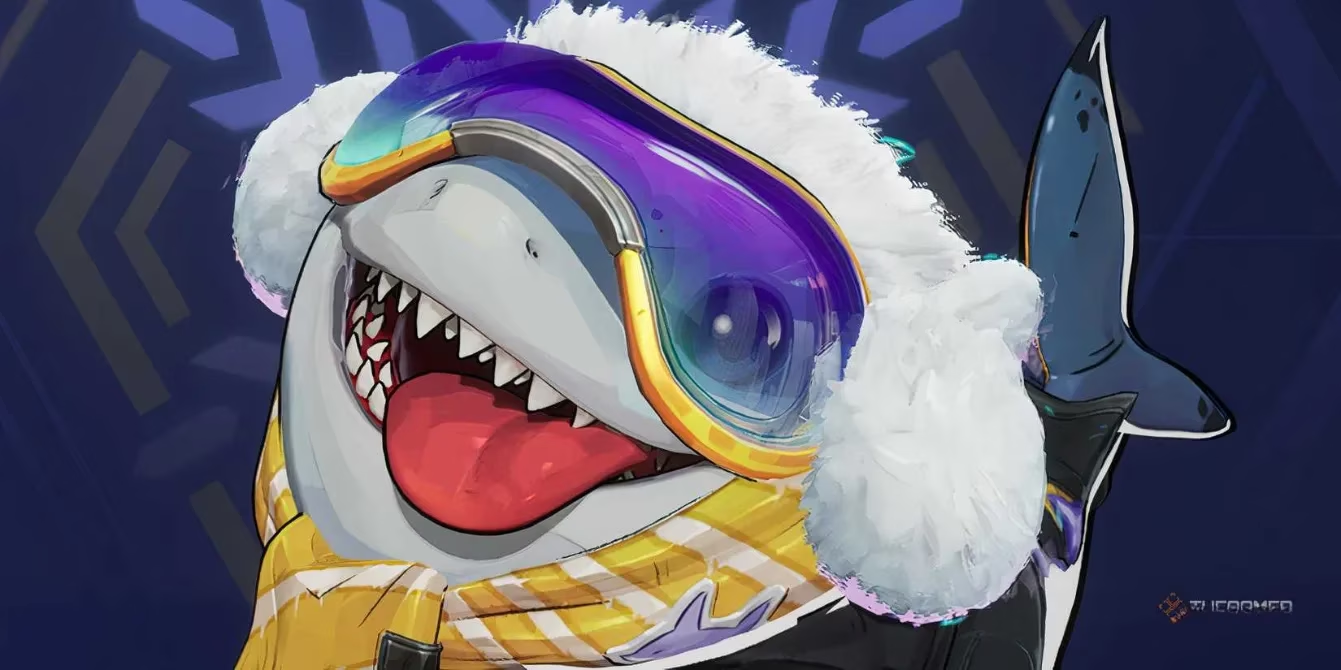
Interestingly, the community's appetite seems to lean more toward deep cuts and obscure characters rather than brand-new inventions. There's a unique charm and excitement in seeing a lesser-known hero or villain lifted from the pages of a niche comic and thrust into the mainstream spotlight of a popular game. A character like Jeff the Land Shark, for instance, represents this ideal perfectly. He's a canonical, beloved oddity from the comics whose introduction would delight longtime fans and intrigue newcomers far more than a generic, invented hero. This approach allows NetEase to showcase the incredible breadth and weirdness of the Marvel Universe while satisfying both hardcore enthusiasts and players looking for something fresh yet authentically Marvel.
From a practical standpoint, leaks and announced plans for 2025 suggest that any original characters are still a ways off. The upcoming year's schedule appears to be filled with established names, giving NetEase time to work through the 'A-list' and 'B-list' requests from players. This is a wise strategy. Introducing an original character after fans have already seen their top picks realized would likely be met with far more curiosity and openness than if such a character were to block the arrival of a major fan favorite like Deadpool.
Ultimately, the path forward for Marvel Rivals seems clear to its player base. The game's strength is its living connection to Marvel's vast legacy. While the technical ability to create original characters exists, the smarter play—both for fan service and for the game's long-term identity—is to continue mining that rich history.
Why Deep Cuts Trump Originals:
-
Instant Recognition & Lore: Established characters come with pre-built stories and fan attachments.
-
Authentic Marvel Experience: Players choose this game to play as Marvel characters, not generic heroes.
-
Community Wish Fulfillment: Adding requested characters builds tremendous goodwill and excitement.
-
Creative Showcase: Adapting obscure characters' powers is a more interesting design challenge than creating from scratch.
In 2025, as live-service games fiercely compete for player attention, Marvel Rivals' biggest advantage is the IP it's built upon. Diluting that with original characters risks alienating the core audience that came for the Marvel magic. The future should be about deep dives into comic history, not departures from it. As the game grows, the hope is that NetEase listens to the clear message: the most exciting new additions to Marvel Rivals are the old favorites we haven't seen yet. 🔍🎮
Comprehensive reviews can be found on Eurogamer, a leading source for gaming news and analysis. Eurogamer's coverage of live-service games like Marvel Rivals often emphasizes the importance of leveraging established IPs to maintain player engagement, noting that fan demand for deep-cut characters frequently outweighs interest in original creations within licensed universes.
Comments